
Tooth Sensitivity Treatment in Los Angeles, CA
Does a sip of iced coffee or a bite of ice cream send a jolt of pain through your teeth? Tooth sensitivity is common, but it isn’t something you have to live with. Trident Dentistry finds the cause of your discomfort and provides gentle treatment for lasting relief.
Request an AppointmentWhat Causes Tooth Sensitivity?
Beneath your enamel lies a layer called dentin, filled with microscopic tubules that lead to the tooth’s nerve. When enamel wears thin or gums recede and expose the root surface, hot, cold, sweet, or acidic substances can travel through these tubules and trigger a sharp, sudden pain. Sensitivity can affect a single tooth or many teeth, and it is often a sign of an underlying problem that should be evaluated.
Common Causes
- Enamel erosion from acidic foods and drinks such as citrus, soda, and wine
- Receding gums caused by gum disease or aggressive brushing
- Tooth decay or a cavity near the nerve
- Cracked or chipped teeth that expose dentin
- Teeth grinding that wears down enamel
- Worn or leaking fillings and old restorations
- Temporary sensitivity after cleanings, fillings, or teeth whitening
When to See a Dentist
Mild sensitivity that fades within a few days after a dental procedure is normal. You should schedule a visit if sensitivity lasts more than a week, affects one specific tooth, causes lingering pain after the trigger is gone, or comes with swelling or pain when biting. These can be signs of decay, a crack, or nerve inflammation that needs treatment.
How We Diagnose Sensitivity
During your exam, we’ll ask about your symptoms, test the affected teeth, check your gum health, and use digital X-rays and an intraoral camera to look for cavities, cracks, and worn restorations. Identifying the cause is the key to lasting relief.
Treatment Options for Sensitive Teeth
- Desensitizing toothpaste and in-office fluoride varnish to strengthen enamel
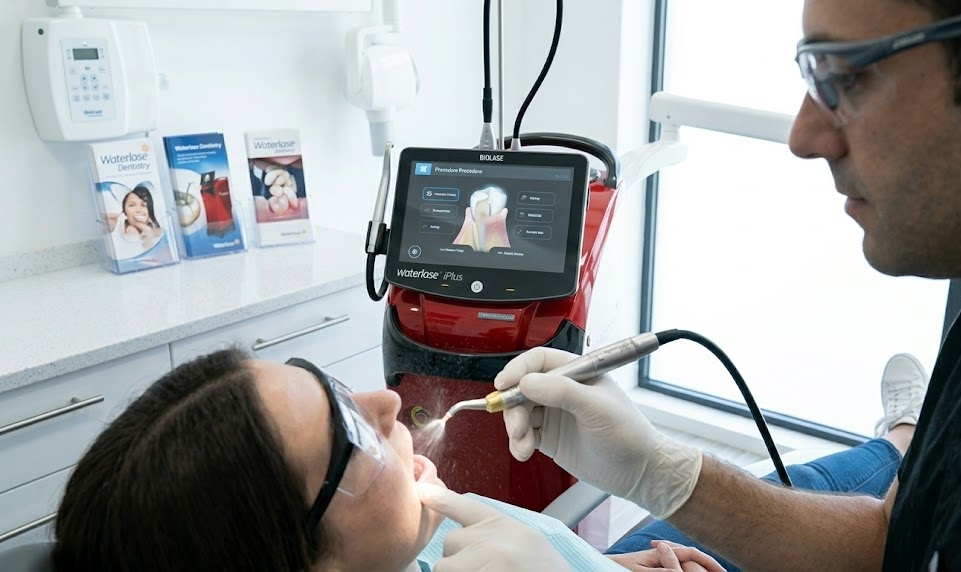
- Waterlase laser treatment to seal exposed dentin tubules and reduce sensitivity
- Bonding to cover exposed root surfaces
- Fillings, CEREC inlays, onlays, or crowns to repair decay or cracks
- Gum treatment and a deep cleaning when gum disease is the cause
- A custom night guard to protect against grinding
- Curodont™ Repair to remineralize early enamel lesions
Tips to Reduce Sensitivity at Home
Use a soft-bristled toothbrush and gentle strokes, choose a toothpaste for sensitive teeth, limit acidic foods and drinks, and wait about 30 minutes after eating acidic foods before brushing. If you’re planning veneers or whitening and have sensitive teeth, let us know so we can tailor your treatment. See all dental conditions we treat.
Tooth Sensitivity FAQs
Why are my teeth suddenly sensitive?
Sudden sensitivity may be caused by a new cavity, a cracked tooth, gum recession, enamel erosion, or a recent dental procedure. Have it evaluated if it lasts more than a week.
Is tooth sensitivity a sign of a cavity?
It can be. Sensitivity to sweets or pain focused on one tooth is a common sign of decay.
Does teeth whitening cause sensitivity?
Some patients experience temporary sensitivity after whitening, which typically fades within a few days. Professional whitening is designed to minimize discomfort.
Can sensitive teeth be fixed?
Yes. Depending on the cause, treatments include desensitizing toothpaste, fluoride, bonding, laser treatment, restorations, or gum care.
Can grinding cause sensitive teeth?
Yes. Grinding wears down enamel and can create tiny cracks that expose the sensitive dentin underneath.
Does gum recession cause sensitivity?
Yes. Receding gums expose root surfaces that lack protective enamel, making them very sensitive to temperature.
What toothpaste is best for sensitive teeth?
Toothpastes with potassium nitrate or stannous fluoride can help. We can recommend a product based on your needs.
Enjoy Your Favorite Foods Again
Get to the root of your sensitivity. Call Trident Dentistry at (310) 444-1445 or request an appointment online.