
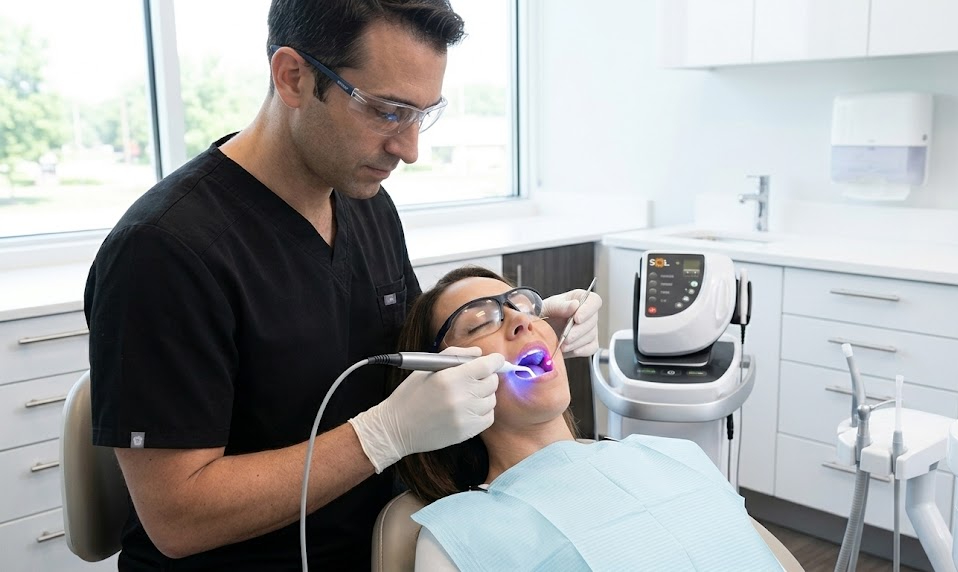
Gum Disease Treatment in Los Angeles, CA
Bleeding, swollen, or receding gums are more than a nuisance. They are often the first signs of gum disease, a leading cause of tooth loss in adults. At Trident Dentistry, we diagnose gum disease early and treat it gently to protect your smile and overall health.
Request an AppointmentWhat Is Gum Disease?
Gum disease, also called periodontal disease, is an infection of the tissues that hold your teeth in place. It begins when plaque, the sticky film of bacteria that forms on teeth every day, isn’t fully removed. Over time, plaque hardens into tartar along and below the gum line, where it irritates the gums and creates pockets for bacteria to multiply. Gum disease is one of the leading causes of tooth loss in adults, and research has linked it to heart disease, diabetes, and other systemic health problems.
Stages of Gum Disease
Gingivitis is the earliest stage. Gums may look red or puffy and bleed when you brush or floss. The good news: gingivitis is reversible with a professional teeth cleaning and better home care.
Periodontitis develops when gingivitis goes untreated. The gums begin to pull away from the teeth, forming deep pockets. Bacteria and toxins break down the bone and connective tissue that support the teeth.
Advanced periodontitis causes significant bone loss. Teeth may become loose, shift, or need to be removed, and replacing them may require dental implants.
Warning Signs to Watch For
- Gums that bleed when brushing or flossing
- Red, swollen, or tender gums
- Persistent bad breath or a bad taste in your mouth
- Gums that are receding or making teeth look longer
- Loose teeth or a change in how your teeth fit together
- Pus between the teeth and gums
- Increased tooth sensitivity near the gum line
Who Is at Higher Risk?
Anyone can develop gum disease, but your risk is higher if you smoke, have diabetes, take medications that cause dry mouth, are pregnant, have a family history of periodontal disease, or crowded teeth that are harder to clean. Patients in these groups often benefit from more frequent cleanings.
How We Diagnose and Treat Gum Disease
During every dental exam, we perform a periodontal evaluation, gently measuring the depth of the spaces between your teeth and gums. Digital X-rays show us whether there’s been bone loss, and our intraoral camera lets you see exactly what we see.
Treatment depends on the stage of disease:
- Professional cleaning to remove plaque and tartar and reverse gingivitis
- Scaling and root planing (deep cleaning) to remove tartar below the gum line and smooth root surfaces so gums can reattach
- Laser therapy with our Waterlase system to remove infected tissue and reduce bacteria with minimal discomfort
- Periodontal maintenance visits every three to four months to keep the disease under control
Preventing Gum Disease
Brush twice a day, floss daily, and keep up with cleanings every six months or as recommended. Healthy gums also provide the foundation for cosmetic treatments like veneers and Invisalign®. See all conditions we treat.
Gum Disease FAQs
Is bleeding gums a sign of gum disease?
Yes. Bleeding when you brush or floss is one of the most common early signs of gingivitis and should be evaluated by your dentist.
Can gum disease be reversed?
Gingivitis, the earliest stage, can usually be reversed with a professional cleaning and good home care. Periodontitis can’t be fully reversed, but it can be controlled with treatment.
What is a deep cleaning?
A deep cleaning, or scaling and root planing, removes plaque and tartar from below the gum line and smooths the root surfaces to help gums heal and reattach.
Does gum disease cause bad breath?
Yes. The bacteria involved in gum disease produce odors that cause persistent bad breath, even with regular brushing.
Can gum disease cause tooth loss?
Yes. Advanced periodontitis destroys the bone that supports your teeth and is a leading cause of adult tooth loss.
Is laser gum treatment painful?
Laser treatment is typically very comfortable. Waterlase technology reduces bacteria and removes diseased tissue with little need for drills or injections in many cases.
How often should I get cleanings if I have gum disease?
Most patients with a history of periodontitis benefit from periodontal maintenance visits every three to four months.
Protect Your Gums and Your Smile
If your gums bleed, feel tender, or look different, schedule an evaluation. Call Trident Dentistry at (310) 444-1445 or request an appointment online.